Trigger points Myofascial, connective tissue & scar tissue dry needling + link to understanding the difference between Dry Needling and Acupuncture
Understanding pain science: how it connects to massage therapy
…..More uploaded regularly…
THE ‘NO PAIN’ NO GAIN MYTH Straight out of Jane Fonda’s exercise videos in the 1980s 🙄 in fact, pain is a warning ⚠️
The word “remedial” means “to apply remedy”. Therefore, Remedial Massage is about supporting the body to heal from an injury, tension or pain by changing sensory perception in the nervous system. If your massage is beyond the “good pain point “ and becomes painful while your on the table it is important you speak up 📣 Maybe in your first treatment you didn’t feel it was deep enough? That has a lot to do with neural pathways and pain receptors in muscle cell, when muscles in tension, the sensitivity or sensation may drop. During treatment muscles respond and neural pathways re-establish to again communicate signals or sensations to the brain, we feel the pain after the brain has processed those signals and here is the important part to take into consideration when expecting your pain to be a ‘quick fix’: the signal of pain the brain will send to the body are not only coming from the direct stimuli that started the pain, more over they will be dependant on the overall parts of the complete nervous system, up and down the chain (one part of the the brain may change a signal directly coming from another), the environment a person is in, emotional and mental state a person is at at the time (ie; are they in flight or fight mood with high stress hormones active such as adrenalin and cortisol levels, are they under stress, tried? extra..)
There are fascinating new developments in our understanding of how pain is experienced which are directly related to massage 1. Our current understanding of pain signal transmission shines more light on the way we experience pain. When signals arrive to the central nervous system they travel via the spinal cord and then ascend through the lower, mid, and upper portions of the brain until they are fully processed. As they travel through the intensity of the signals can be altered. “Various factors can cause pain signals to be amplified; this is called ascending facilitation; hyperalgesia and allodynia. Hyperalgesia; higher than normal sensitivity to pain. Allodynia; pain that shouldn’t be (like when even gently stroking the skin is painful). Obviously our goals of pain treatment are to decrease any ascending facilitation that may be occurring.”2
This research points one of the most integral benefits of massage in pain management is when enjoyable sensations such as in massage are present a ‘quietening’ hof the signals takes place , the upper parts of the brain can send signals to the lower areas and stop pain input. This process is called descending inhibition (or descending modulation).
Going back to my question; “Maybe in your first treatment you didn’t feel it was deep enough?” Now that you understand more about the way pain in transferred, maybe you can understand why after a few sessions and normal function is restored, we are often able to re-apply deeper pressure without the negative consequences of pain. So, what is good pain ? The Optimal Therapy Zone (OTZ) is that amount of pressure which, when applied to soft tissue with an appropriate massage therapy technique, provides optimal therapeutic results in the shortest period of time without causing undue discomfort. The OTZ is found where the pressure is enough to cause discomfort but not enough to produce voluntary or involuntary splinting of the area which is being worked.
In my massage I don’t claim to release because our body is doing that – we are just helping your mind to change the way is it interacting with parts of your body.
Need more facts ? Just ask there’s lots to gain Safe receiving everyone ✅
LOWER BACK PAIN..IS IT the SPINAL ROTATION MUSCLES?..
The Quadratus Lumborum (QL) muscle group are in charge of lateral flexion of the trunk, in raising the hip on both sides and extending the lumbar spine. Tension in this area can mimic low back pain, hip pain, backache, lumbar myalgia, pain in SI (sacroiliac/ top of the hip ) region, hip and buttocks pain; also the head of the thigh bone and even pain when coughing. These muscles sit deep to the major Erector Spinae (spine erectors) group and can be easily over looked. Sitting or standing in the same position for long periods of time, poor posture, continuous lifting, pregnancy and obesity are some of the causes of QL trigger point pain.
Pain in the QL could be caused by poor posture, Occupational stresses such as prolonged sitting or standing at the workplace or continuous lifting activities, sedentary lifestyle, obesity or pregnancy.
The type and severity of pain can vary. Low back pain is often described as a deep ache, but it can also be felt as sharp and acute depending on the cause. Although the discomfort usually occurs at rest, it can get worse with movement. Lying, walking, standing, and rolling may aggravate the pain. Sharp pain may also be felt when sneezing or coughing. Quadratus lumborum pain can even interfere with daily activities such as walking and sitting.
Quadratus lumborum pain can become chronic. Long-term pain often impairs a person’s quality of life and well-being, and also affects them physically. People with chronic low back pain are more likely to experience anxiety and depression than those without chronic pain.
Also, if one part of the body is causing pain, other parts try to support the painful area. For example, if the quadratus lumborum is tight and painful, we may find that the person begins to twist or change their gait by changing their body posture. This changing posture can place an additional load on other parts of the body, such as the hips, further increasing the pain.
When working on this area in the massage space, the aim to free up the trigger points in the area as well as surrounding structures connected to the same ligament (sacrotuberous ligament) and iliopsoas muscle.
Tension can contribute to pain however weekness can also be a big contributor and it is also important to refer my clients to their PT or physiotherapy to work on strengthening the spine stabilisers and work on correct firing pattern of the trunk and hip by the right exercises (strengthening the posterior hip muscles) as well as showing the client the right stretching routine or working with a yoga instructor. ..
EXERCISE STRECH MASSAGE REPEAT
Essential oils – THE MEDICINAL GIFT OF NATURE
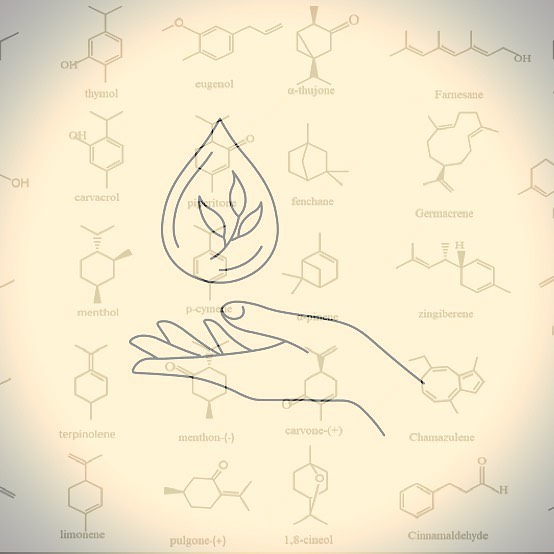
🌿 “Essential oils are chemically classified as alcohols, esters, ethers, ketones, aldehydes, amines, amides, phenols, and heterocyclics. They are predominantly terpenes (about 80%), and over three hundred low molecular weight volatile compounds have been identified, which could have beneficial properties. The beneficial characteristics of essential oils sometimes involve different chemical elements of the compounds”.
These gifts of nature are constructed in order for plants and organisms to defend them selves and hold huge medical properties that should not be taken lightly and so understanding there qualities if planing to use them on the body is vital as they should be treated as medicine and applied correctly, your massage therapist should only be using essential oils if they have been trained in Aromatherapy.
Essential oils have antimicrobial , antibacterial, antiviral, anti fungal, anti inflammatory, anti septic and more. Their uses are extensive and varies; from relaxation, nervous system response, muscle aches, breathing support, circulation to blood pressure change- these little gifts are POWERFUL and should be treated that way.
Furthermore to their physiological abilities, essetial oils effect our sense of smell Olfaction is the sense directly connected with emotional areas in the brain and directly related to memory. 1. “It holds an emotional primacy in perception and its role in sampling the real physical world. olfactory stimuli can evoke autobiographical memories with more emotional and vivid experiences. Smells are handled by the olfactory bulb, the structure in the front of the brain that sends information to the other areas of the body’s central command for further processing. Odors take a direct route to the limbic system, including the amygdala and the hippocampus, the regions related to emotion and memory. The olfactory signals very quickly get to the limbic system,The close anatomic relations between the systems deployed for olfaction and for emotion account for the important links found between these two functions. “
As found in the systemic review of essential oil in aromatherapy “Aromatherapy is natural and noninvasive gift of nature for humans. It’s not only the disease symptoms which are eradicated but the whole body is rejuvenated by the use of aroma. Aromatherapy regulates the physiological, spiritual and psychological upliftment for the new phase of life. This therapy is not only preventive but also can be used in the acute and chronic stages of disease. Pharmaceutical industries are trying for environmental friendly, alternative and natural medicine for disease associated with pathogens and metabolism. There may be a possibility of enhancing the rate of reaction and bioavailability of drugs from the use of these essential oils.
If properly studied, these volatile oils may have the synergistic effect with the drugs used in the treatment of central nervous system disorder. Moreover, the time at which the plant contains the maximum amount of volatile oil with various chemical constituents also is a matter of discussion. Essential oils can be a useful non-medicinal option or can also be combined with conventional care for some health conditions, provided safety and quality issues are considered. The tilt of the scientific community towards complementary and alternative medicine has given the new hope to reduce the unwanted effects of modern medicine by these essential oils and if properly explored to their full potential, this therapy can be a boon not only to the patients but also to a common man.”2.
What is a trigger point (TP)? “A hyper irritable spot within a taught band of skeletal muscle that is painful on compression, stretch, overload or contraction of the tissue which usually responds with a referred pain that is perceived distant from the spot” (symonds DG, Travell . 1999)
One can also argue that TPs are basically a construction in muscle fibre..
Causes of trigger points:
Trigger points can develop with or without damage, Mechanical and metabolic. Mechanical stress: Postural, Repetitive activity or sustained overuse. Acute injury or trauma, Chronic injury / pain or Psychological and emotional stress (Menses & Simons, 2001)
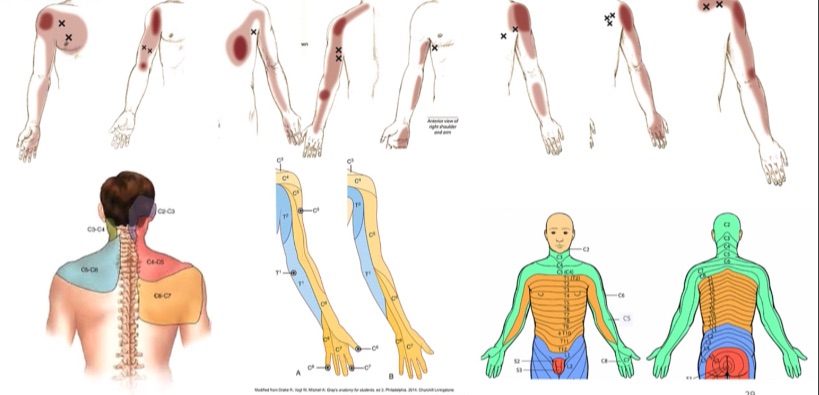
Referred pain caused by trigger points
Referred sensation : The heightened sensitization or irritability of the central nervous system also correlate with higher intensities of pain (in different levels, that’s why the term sensation would be more accurate) and larger referral zones. Referred sensation is reproduced by applied pressure.
Symptoms:
Aching, Heaviness / tiredness, Feeling of fatigue, Muscle stiffness, Local and Radiating pain, Deep non-specific, Muscle weakness, Reduced ROM and Tender to pressure.
Both active (producing pain) and latent (pain free) trigger points can have negative effects on muscle function such as weakness, inhibition, increased motor irritability, spasm, and altered motor recruitment.
Neuromuscular technique, refers to the manual application of specialized (usually) digital pressure and strokes, most commonly applied by finger or thumb contact by friction if the origin/ insertion of a muscle a certain number of time and following by “flushing” the belly.
Chronic pain is the presence of areas of soft tissue dysfunction that promote pain and distress in distant structures – These are known as myofascial trigger points.
NMT (neuromuscular therapy) aims to produce modifi-cations in dysfunctional tissue, encouraging a restoration of functional normality, with a particular focus of deactivating focal points of reflexogenic activity, such as myofascial trigger point.
Myofascia ; myo – muscle, fascia – connective tissue. The Myofascial system is the fabric that stabilises and connects the body, influences movement and acts as a sensory organ – relating and influencing emotions.
A trigger point sits in the muscle tissue however the muscle tissue is wrapped by connective tissue and as a result is also influenced by the biochemical changes that occur as a result of this neuromuscular change- leading to many physical and emotional influences.
It’s important for us clinicians to understand that Referred pain happens in the dorsal horn (a region in the spinal cord) and reflected in the muscle – which is why our main focus is the nervous system and treating a patient in a holistic approach considering their whole wellbeing and not just looking at one muscle or on aspect of their health.
Dry Needling – is a form of more invasive physical therapy to help treat trigger points reduce their occurrence- by inserting a fine acupuncture needle into the muscle fibre to promote a local twitch response.
“The advantages of dry needling are increasingly documented and include an immediate reduction in local, referred, and widespread pain, restoration of range of motion and muscle activation patterns, and a normalization of the immediate chemical environment of active myofascial trigger points. Dry needling can reduce peripheral and central sensitization.” (Dommerholt, 2011).
Contraindications (a condition that indicates a treatment is not recommended) for dry needling (DN):
Fear of needles, believes, communication, cognitive, age-related factors.
Medical emergency or acute medical condition.
Local infection
Over an area or limb with lymphedema as this may increase the risk of infection/cellulitis and the difficulty of fighting the infection if one should occur.
Inappropriate for any other reason.
Some adverse reactions to DN maybe be:
Minor reactions might be bleeding, bruising, pain during treatment, short term pain after treatment.
major reaction may be shortness of breath, severe sharp pain, signs of infection or unusual discomfort it is important to seek medical treatment urgently. Some people may also feel faint or lightheaded, dizziness or even vomiting in serve cases (research shows around 0.1% of clients would experience major adverse effects from dry needling).
Research shows that ideal Dry Needling results can be long lasting and require anywhere between 5 to 12 sessions due to the heavy chemical composition released from tissues during application of this technique therefore therapist should not work more than 6 to 12 trigger points in a session depending on the client.
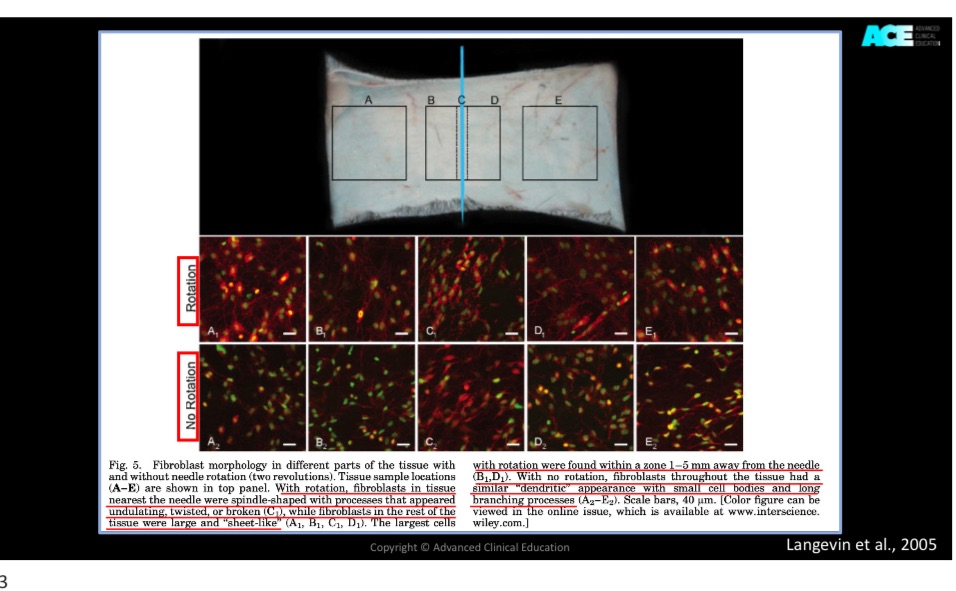
Dry needling is also used for SCAR TISSUE release and CONNECTIVE TISSUE CHANGES ..
“The possible explanations found in the literature for the decrease in pain include the effects of dry needling at the local level (producing an interruption of spontaneous electrical activity on the taut band or local vasodilation), activation of the peripheral segmental pain inhibition (explained through Gate Control Theory), or activation of the descending pathways of pain inhibition at the central nervous system level (serotonergic and noradrenergic endogenous opioid release and conditioned modulation of pain)”.
Credits to Advanced Clinical Eduction for the resources bellow :
Reintroducing loading:After a dry needling session, which can cause some soreness or inflammation, gradually increasing the load on the treated area helps to re-establish normal tissue function and prevent further complications.
Improved blood flow:Movement and exercise promote cardiovascular and lymphatic circulation, which helps clear out waste products, deliver oxygen and nutrients to the area, and stimulate the release of endorphins for pain relief.
Pain modulation:Increased blood flow and endorphin release contribute to pain modulation, helping to reduce pain and discomfort associated with scar tissue and trigger points.
Muscle strength and range of motion:Reintroducing loading can also help improve muscle strength and range of motion in the treated area, which is crucial for overall function and recovery.
Scar tissue breakdown:While dry needling can help break down scar tissue, gentle loading and movement are also important for the body’s natural healing process and to prevent adhesions from reforming.
Individualized approach:The specific exercises and activities that are appropriate for increasing the load after dry needling will vary depending on the individual, the location of the treatment, and the specific condition being treated. It’s essential to work with a qualified professional to determine the best approach for your needs.
Understanding the difference between Dr Needling and acupuncture:
Understanding pain science: how it connects to massage therapy
Pain is one of the most common reasons people seek healthcare, yet it remains widely misunderstood. Modern research shows that pain is far more complex than a simple response to injury. It is shaped by physical processes, emotional states, and social influences. By understanding the science behind pain, both clients and therapists can make more informed and effective decisions about care — including the use of massage therapy.
What Is Pain Science?
Pain science examines how pain is created, processed, and experienced. Rather than viewing pain solely as a signal of tissue damage, contemporary research shows that pain is produced by the nervous system and interpreted by the brain. This process is influenced by past experiences, stress levels, beliefs, mood, and environment.
In other words, pain is real — but it is also dynamic and multifaceted. Recognizing this shifts treatment away from simply “fixing damaged tissue” toward addressing the broader systems involved in the pain experience.
The Biopsychosocial Model of Pain
Central to modern pain science is the biopsychosocial model. This framework highlights three interconnected dimensions of pain:
Biological Factors
These include tissue injury, inflammation, nerve sensitivity, and musculoskeletal dysfunction. While important, they represent only one piece of the puzzle.
Psychological Factors
Emotions, stress, fear, anxiety, depression, and personal beliefs about pain can significantly influence how intensely pain is felt. For example, fear of movement may increase muscle tension and sensitivity, reinforcing discomfort.
Social Factors
Work demands, family support, cultural beliefs, financial stress, and access to healthcare all shape how pain is experienced and managed. A strong support system can improve coping, while social stressors may intensify pain perception.
Understanding these overlapping influences allows for a more compassionate and comprehensive approach to care.
Applying Pain Science to Massage Therapy
Integrating pain science into massage therapy enhances both treatment effectiveness and client outcomes.
1. Individualised Treatment Planning
No two pain experiences are identical and no two therapists are the same. A therapist informed by pain science considers not only physical symptoms, but also lifestyle, stress levels, sleep patterns, and emotional wellbeing. This leads to more tailored and responsive treatment plans.
2. Client Education and Reassurance
Education can reduce fear and uncertainty. It is valuable to understand that pain does not always equal damage and movement does not equal more pain. This shift in perspective can positively influence recovery and reduce pain-related stress.
3. Nervous System Regulation
Massage therapy supports relaxation by calming the nervous system. Techniques that reduce muscle tension and encourage slow, steady breathing may help decrease pain sensitivity and promote a sense of safety within the body.
4. Strengthening the Mind–Body Connection
Massage encourages body awareness and mindfulness. By tuning into physical sensations in a safe environment, clients can develop better strategies for recognising tension, managing stress, and responding to discomfort outside of sessions.
5. Collaborative, Holistic Care
Massage therapy works well alongside physiotherapy, psychological support, medical care, and exercise programs. An understanding of pain science allows massage therapists to be active participants in multidisciplinary care, addressing the full spectrum of a client’s needs.
A Broader Perspective on Healing
Pain is not solely a physical event — it is a human experience shaped by biology, psychology, and environment. When massage therapy is guided by modern pain science, it becomes more than a manual technique. It becomes a supportive, educational, and empowering component of care.
It is a privilege to support others who are living with pain thank you for exploring massage therapy as part of a broader management plan to help you better understand your body and regain confidence in movement. True healing is not simply the absence of pain; it is the development of resilience, balance, and overall wellbeing.





 Alignment Massage